
25 : East Gate Stele
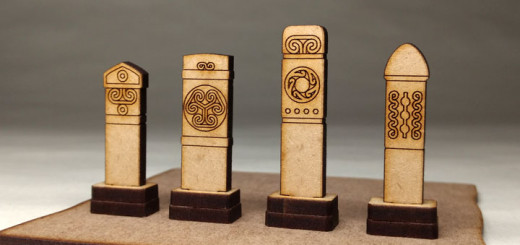
I posted about my Cult Stelai designs for Troy’s South Gate back in Post 11. The stelai are available as a pack of six stelai as Troy’s South Gate and Tower Cult Stelai (SLD-M28-BK-106).
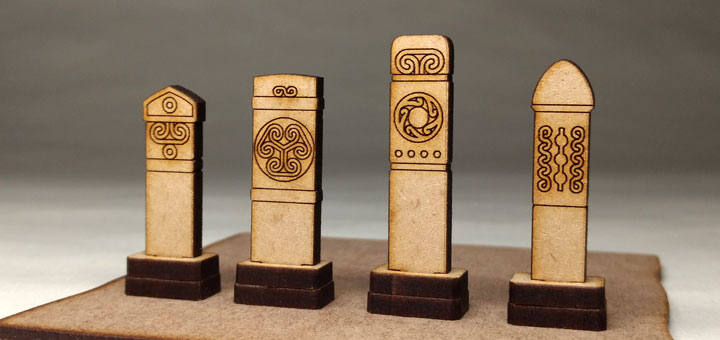
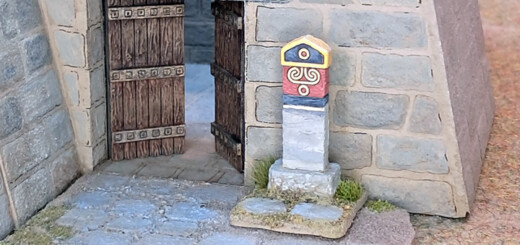
I decided to have at least one of these models at Troy’s East Gate. Perhaps a standing stone like this would act as a boundary marker. If you needed reminding how fortunate you were, being allowed to enter the majestic Citadel of Troy, the stone might add a special significance or be a place to stop and show respect.
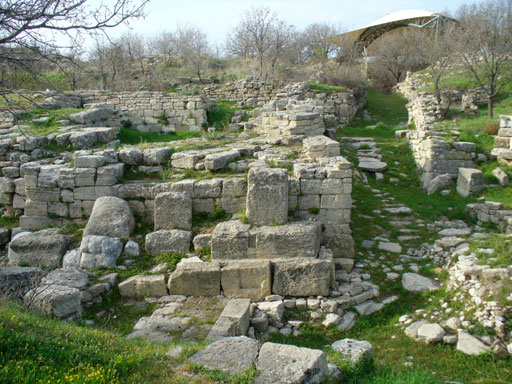
In the Bronze Age, long before Greece had temples, outdoor places in the Ancient world such as gateways took on a special significance. It’s almost certain that like the South Gate, the East Gate would have had an association with an ancient gateway cult as this was typical of Anatolian cultures.
Today, we are familiar seeing Ancient stone monuments in their natural stone colour. In an age that clearly appreciated colour, sculptured standing stones would almost certainly have been coloured with paint and pigment. I designed my stelai with decorative tops with the idea that just the tops would be coloured.
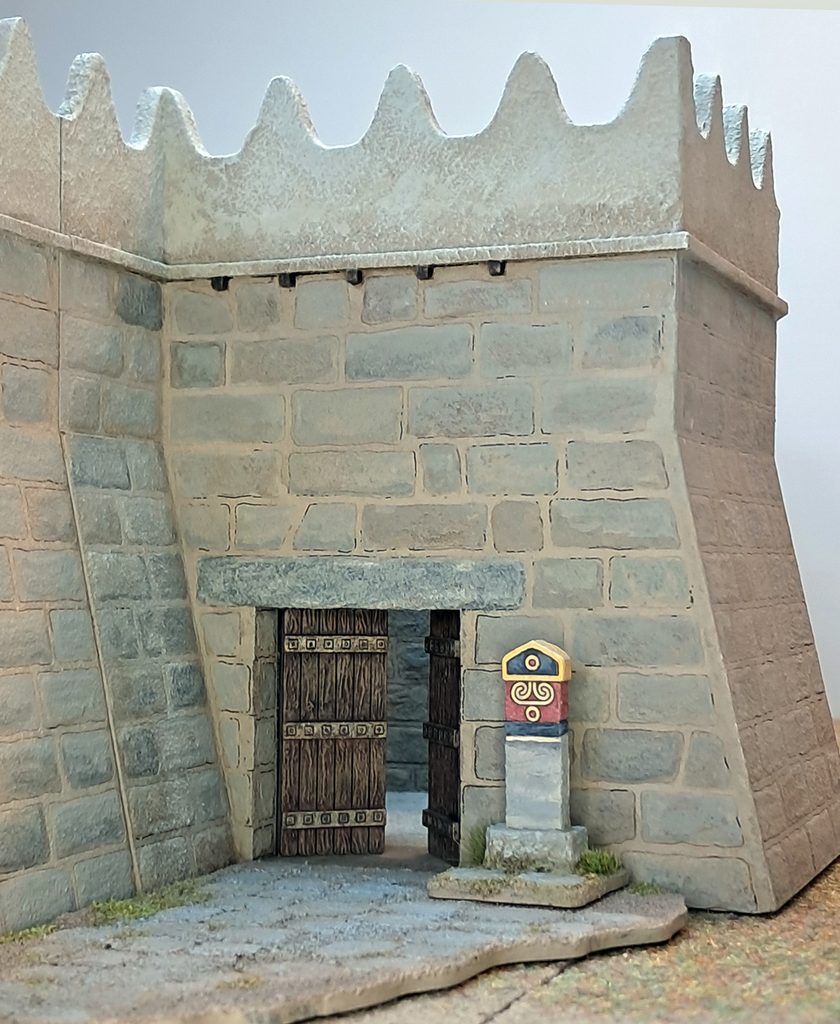
The Aegean artist may have painted directly onto wet lime plaster applied over the stone and used bright but cheaper pigments such as those derived from natural earth and iron oxides like hematite for a reddish-black and yellow ochre. We always have to be especially careful with vivid blues in the Bronze Age as achieving this colour for a dye or a paint could have been extortionately expensive – even for a standing stone at Troy!
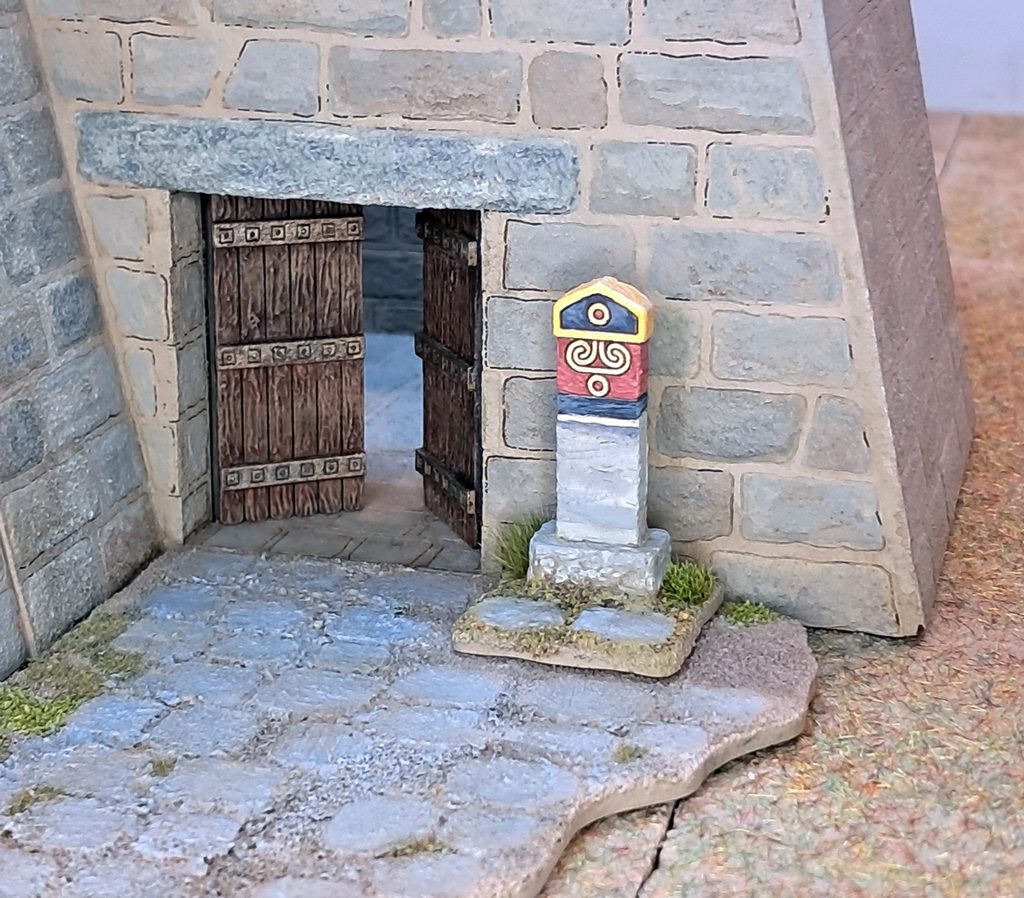
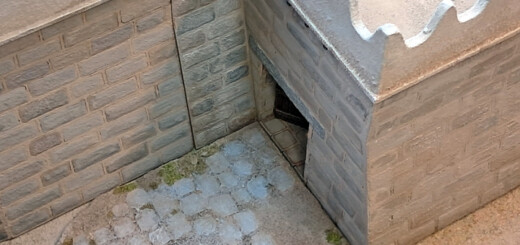
I mounted my standing stone on a wavy-edge base – my favourite design for terrain bases. It can stand on the flagstone terrain base I designed for the East Gate.
RECENT COMMENTS